
Class of 2026
Major in Public Policy, Minor in Sociology, Certificate in Documentary Studies
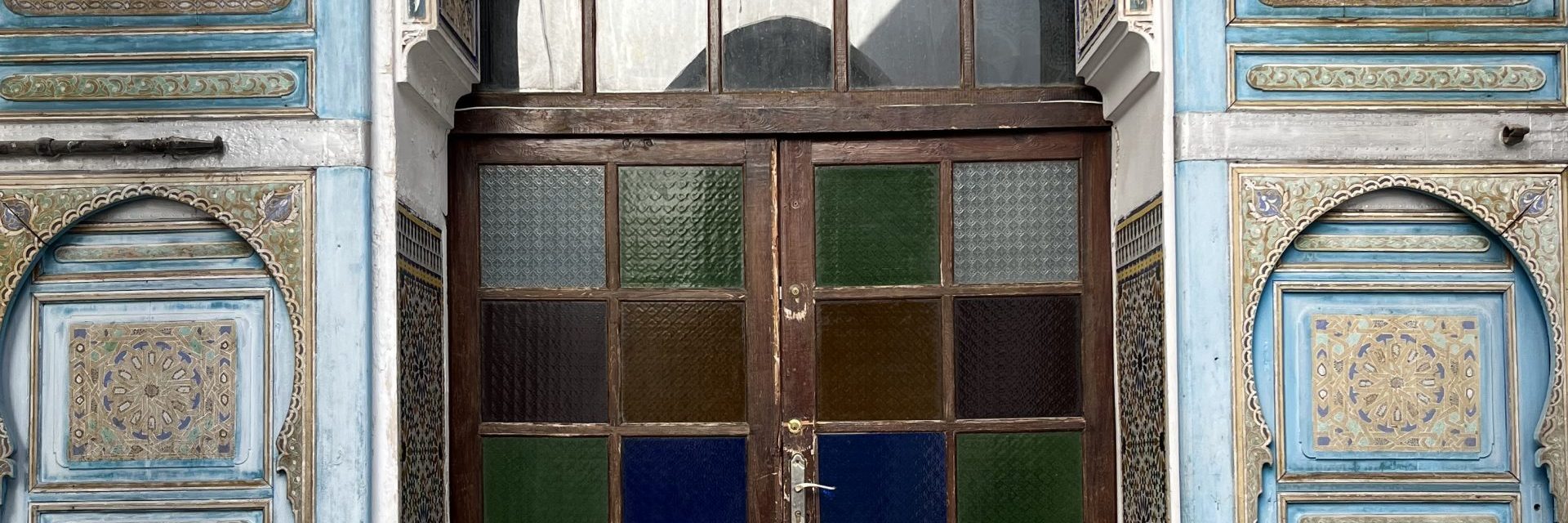
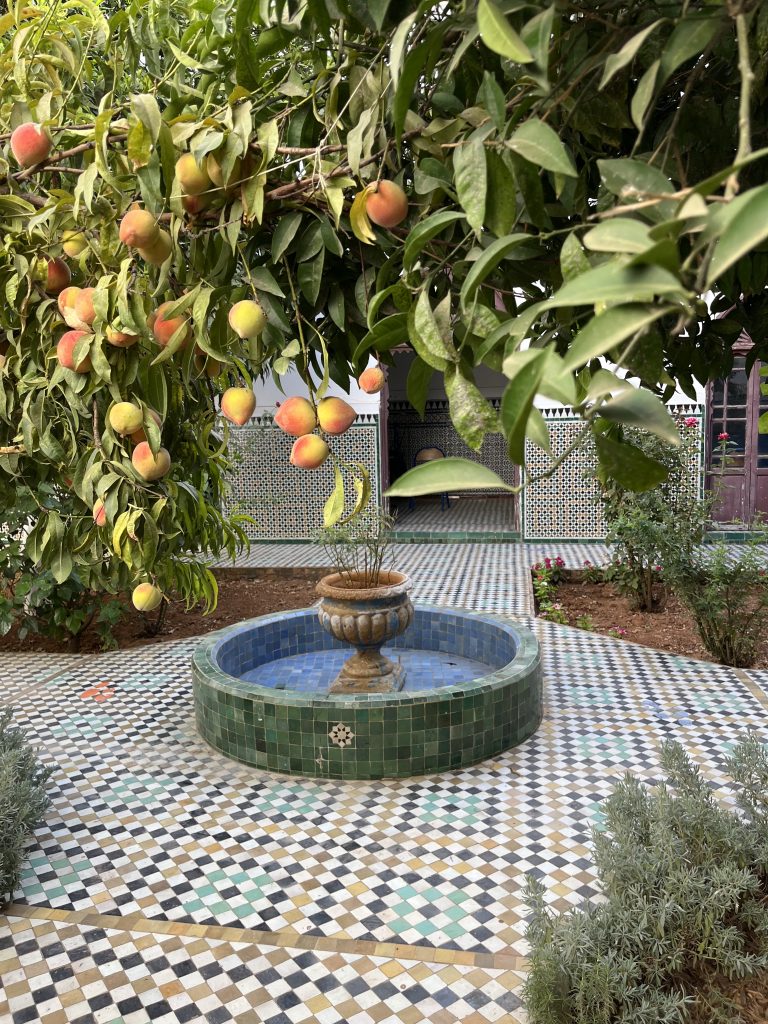
This past summer, I had the opportunity to combine language learning with music during my Critical Language Scholarship (CLS) program in Morocco. While my primary focus was Arabic immersion, I also sought out a way to study Moroccan percussion. Originally, I had planned to train at a dedicated drum studio, Darboush Studios, but just as the program began, I learned that it had permanently closed to relocate to France. That disruption forced me to think creatively about alternatives. I eventually became integrated into the local Meknes community and found what ended up being a better “backup plan”–studying under a local teacher instead of a formal studio–but even this plan evolved in an unexpected direction. Rather than structured lessons in a school, I ended up learning in a riad-turned-musical residency. What began as a backup to my backup plan became one of the most rewarding and distinctive experiences of my summer.
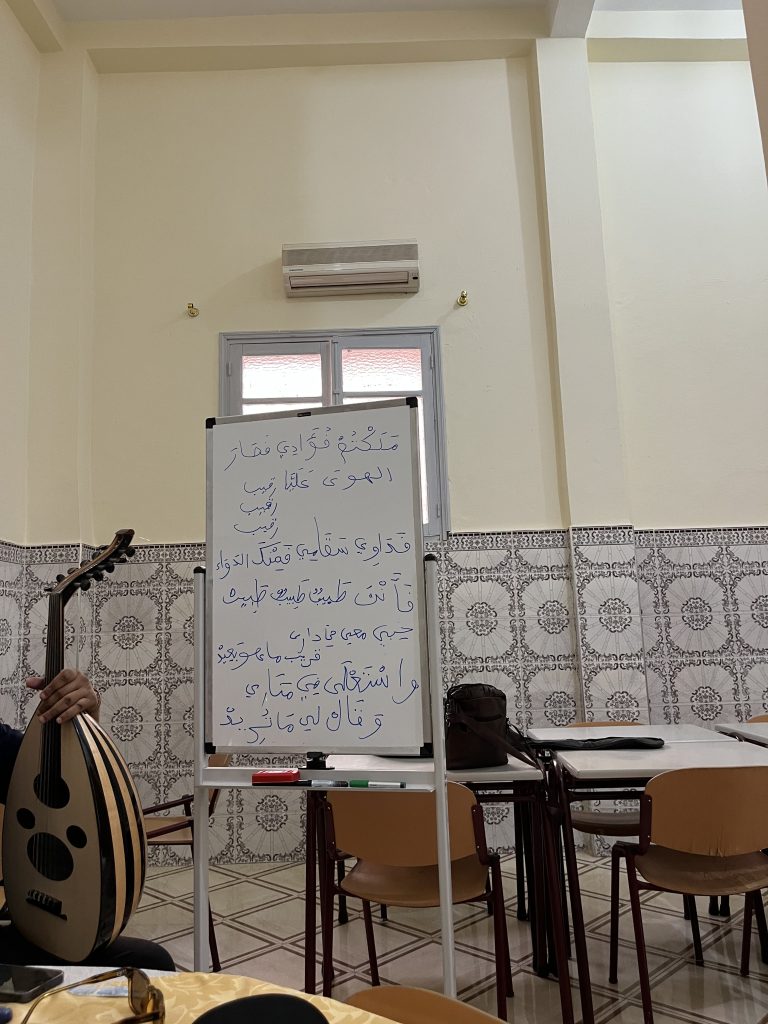
I studied Moroccan drums such as the bendir, darbouka, and daff under the guidance of Ustadh Othmane, a musician whose expertise spans the oud, bendir, and Andalusian poetry and song. Othmane created a space that was less about rigid pedagogy and more about immersion in the living traditions of Moroccan music. With him, I not only practiced the technicalities of drumming but also came to appreciate how percussion is intertwined with poetry, spirituality, and community life. His teaching demonstrated that drumming was not just accompaniment, but a conversation with words, movement, and history.
The bendir’s deep resonance, with its buzzing snare strings, anchored ensembles with an earthy pulse, while the darbouka’s sharp articulation connected Moroccan music to the wider North African and Middle Eastern soundscape. The daff, versatile and circular, often appeared in Islamic devotional or celebratory contexts. Each drum carried a unique voice, and learning them together required me to internalize overlapping tambres, listening as much as playing.
Beyond frequent performance, I integrated my drumming into my own creative practice. Using my AT2020 microphone and a portable recorder, I captured individual strikes, rolls, and rhythmic patterns from each instrument, sometimes layering them with ambient sound from the riad. Later, I edited and processed these recordings into loopable samples and organized them into a custom digital drum kit. This process allowed me not only to preserve the rhythms I was learning but also to experiment with fusing traditional Moroccan percussion with electronic production. My practice sessions thus became both language immersion and studio sessions, as drumming exercises became raw material for conversation and composition.
Duke Students & Employees save more!